Most rooms are lit like an office: one bright fitting in the middle of the ceiling, switched on at dusk and left there. It is practical, and it flattens everything. The rooms that feel good after dark are lit in layers, from several lower sources, and most of them need only three lamps.
Start with the ceiling, then switch it off
Before you buy anything, sit in the room one evening with only the ceiling light on. Notice where it lands: usually a bright circle on the floor and hard shadows under every face. Then switch it off and light the room with the lamps you already own. The gaps you feel in the dark are your shopping list.
Keep the ceiling fitting. It is useful for cleaning, for finding keys, for the afternoon you move the sofa. Just stop treating it as the main light. Put it on a dimmer if you can, and let the lamps take the evening.
Ambient
Ambient light is the base layer: soft, even light that lets you move through a room without thinking about it. It should come from above eye level, or bounce off a wall or ceiling, and never shine straight into your eyes.
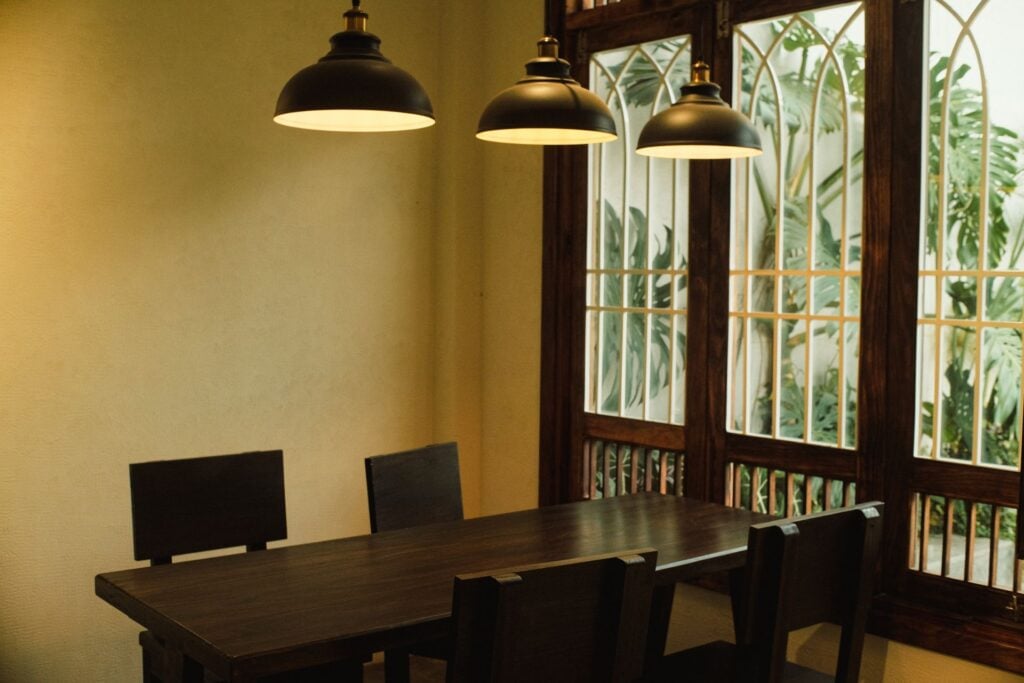
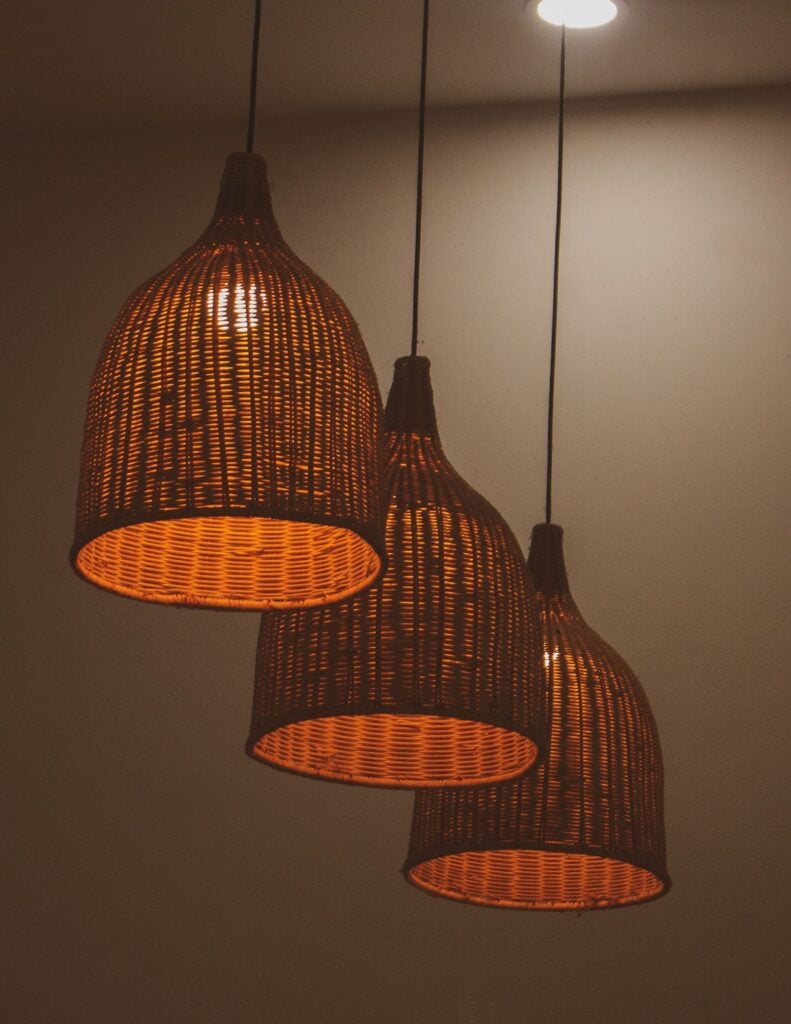
Over a dining table, a pendant hung low does this best, about 75 cm (30 inches) above the tabletop. In a living room, a floor lamp with a linen or paper shade throws light up and out and fills a corner. Aim for light you notice on the walls rather than on the lamp itself. If you can see the bulb from the sofa, the shade is too open or the lamp is in the wrong place.
Light the walls, not the middle of the room. A room feels bigger when its edges glow.
Task
Task light is the lamp you actually use: the one you read by, write by, cut vegetables by. It should be close, directional and a little brighter than everything around it. Place it beside what you are doing, on the side opposite your writing hand, so your own shadow stays out of the way.
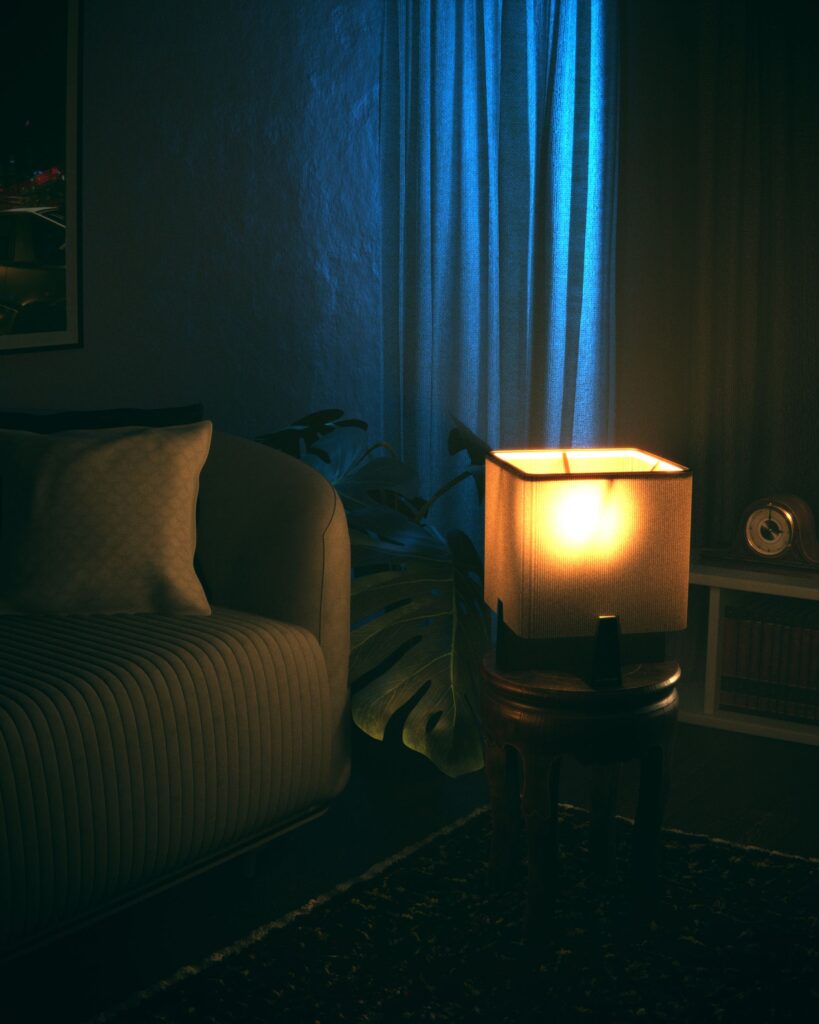
A desk lamp with a solid dome keeps the light on the page and out of your eyes. Beside a sofa, choose a table lamp whose shade sits at about shoulder height when you are seated. That is lower than most people expect. For a reading chair, a swing arm lets you bring the light to the book instead of the book to the light.
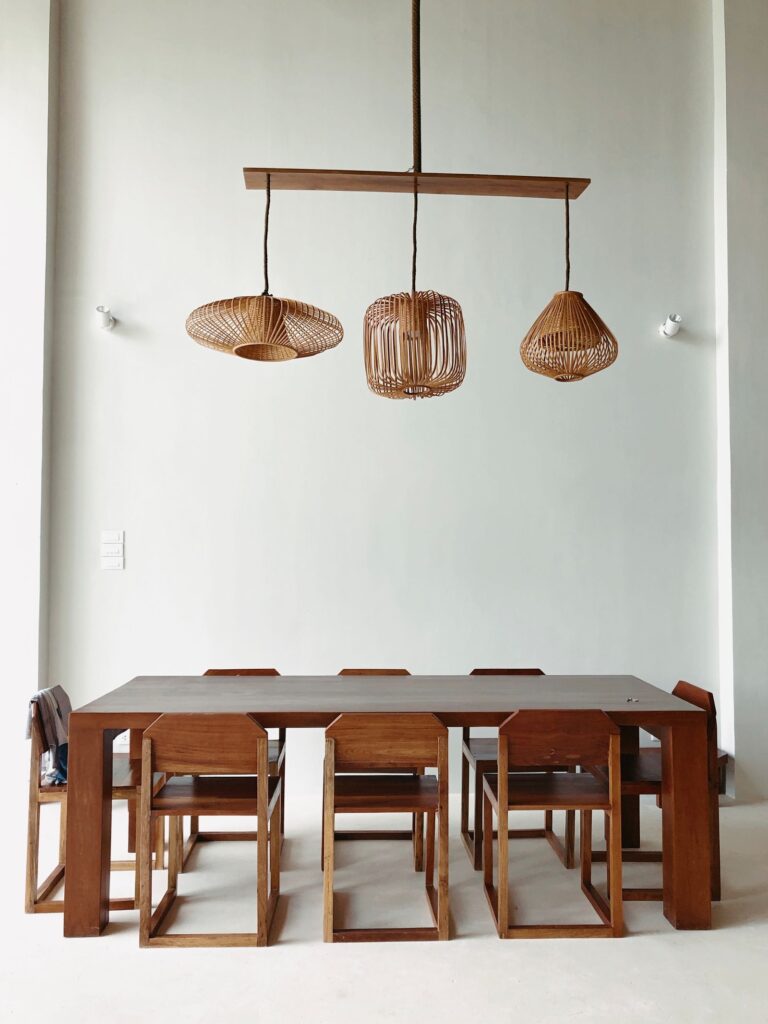
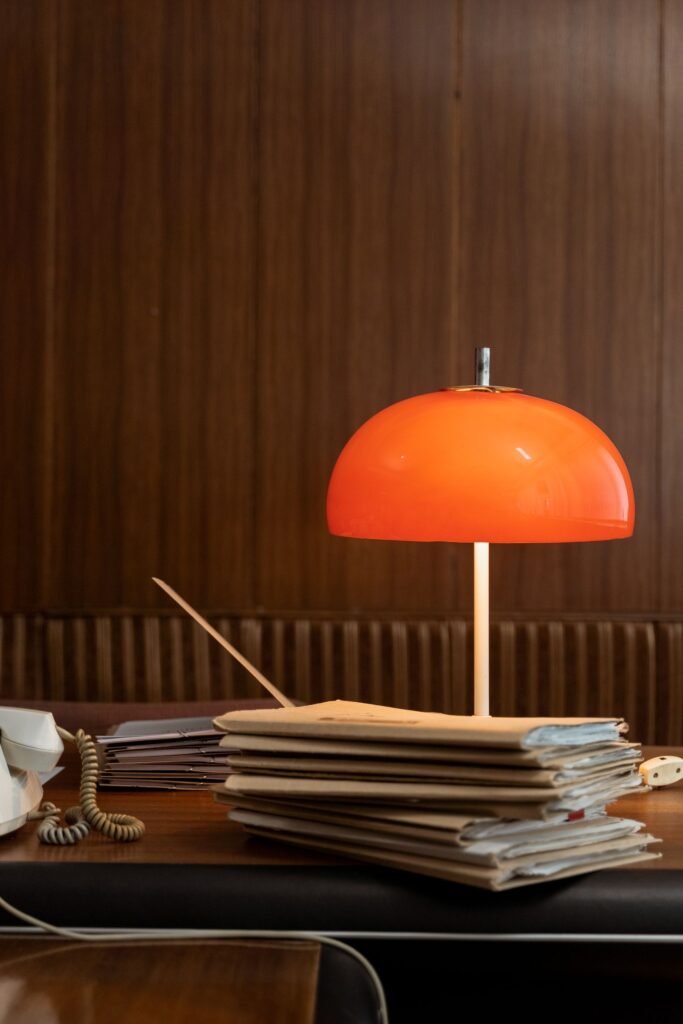
Ambient light over the table and task light on the desk: rattan pendants over the dining table, and the Ember Desk Lamp.
Accent
Accent light is the layer that makes a room feel finished. It is small and low: a wall lamp beside a bookshelf, a lantern on a cabinet, a cordless lamp on the windowsill. It does not help you see anything. It gives the eye somewhere to rest.
Put accent lamps where the room goes dark first, usually the corners furthest from the window. Two small pools of warm light at different heights do more than one bright lamp. Wall lamps work well here, because they free up a surface and light the wall itself, which reads as warmth from across the room.
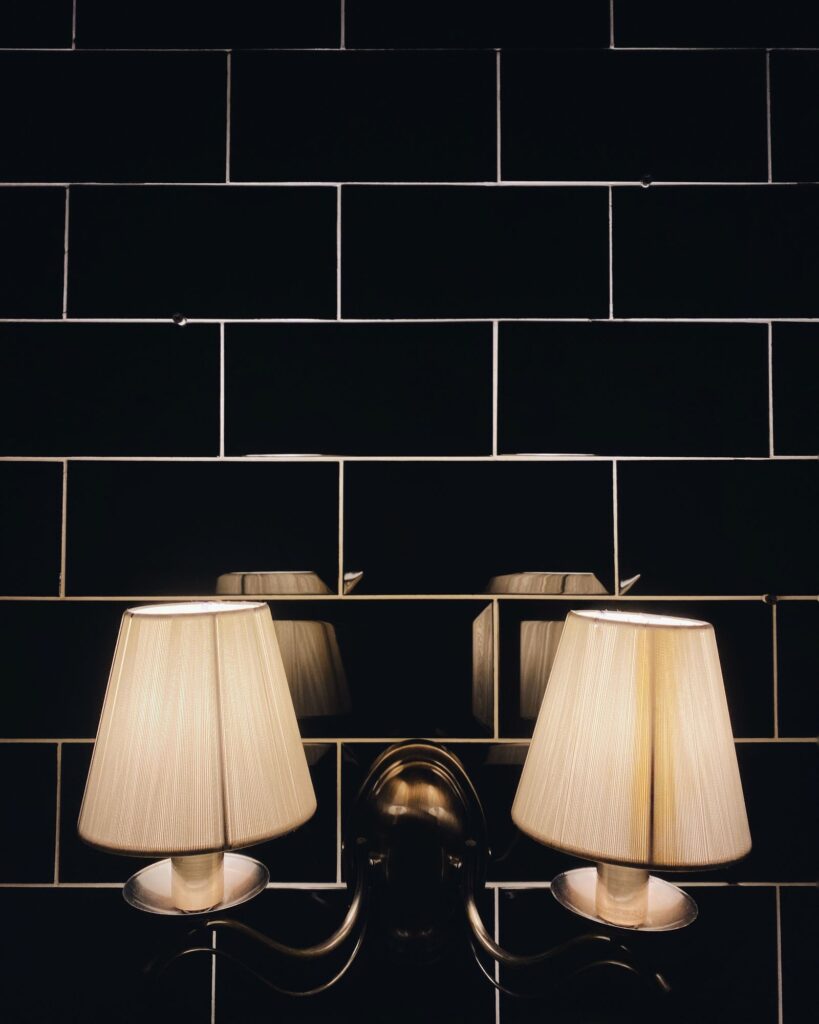
Warm, warmer, warmest
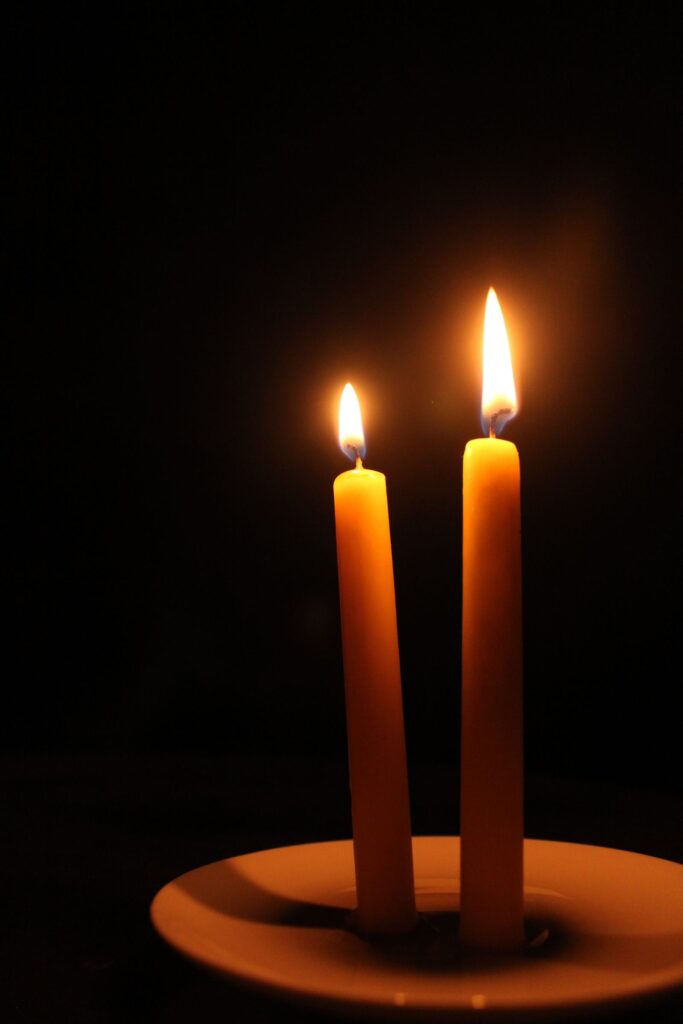
Where the lamps go matters, and so does the bulb inside them. Bulbs are rated in kelvin: the lower the number, the warmer the light. Daylight bulbs sit around 5000K and belong in a workshop. Most household bulbs are 2700K. We ship every lamp with a dimmable 2200K bulb, which is close to candlelight and kind to skin, wood and linen.
Keep every bulb in a room at the same temperature, or the layers will fight each other. Then dim. Three lamps at half brightness feel far better than one at full. If you change only one thing this autumn, change the bulbs.
Switch off the ceiling, switch on three lamps, and give the evening a little longer.