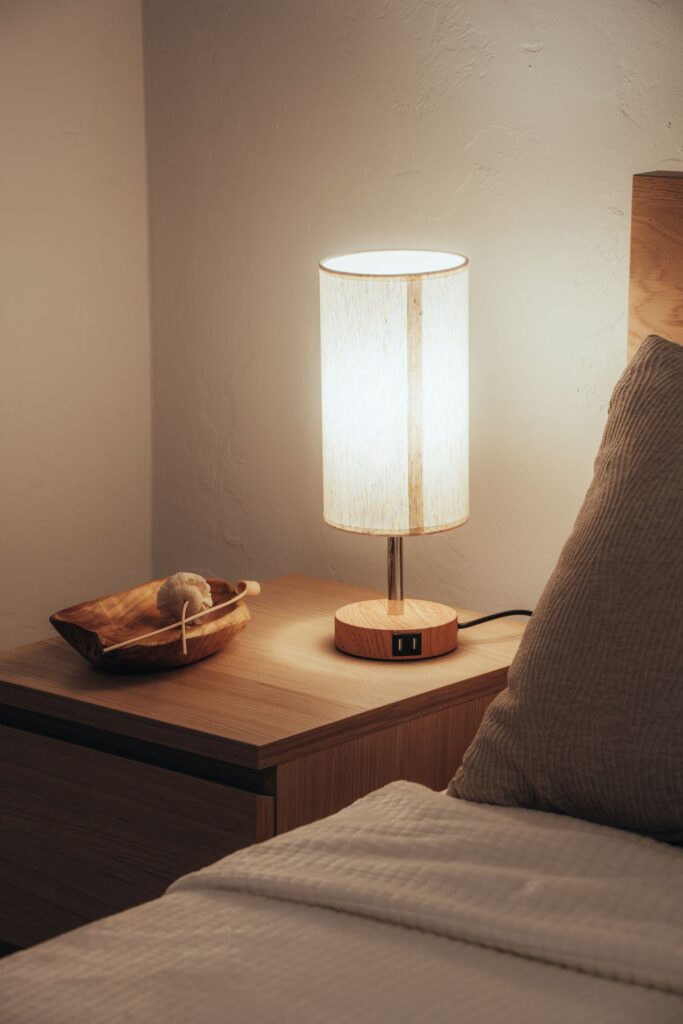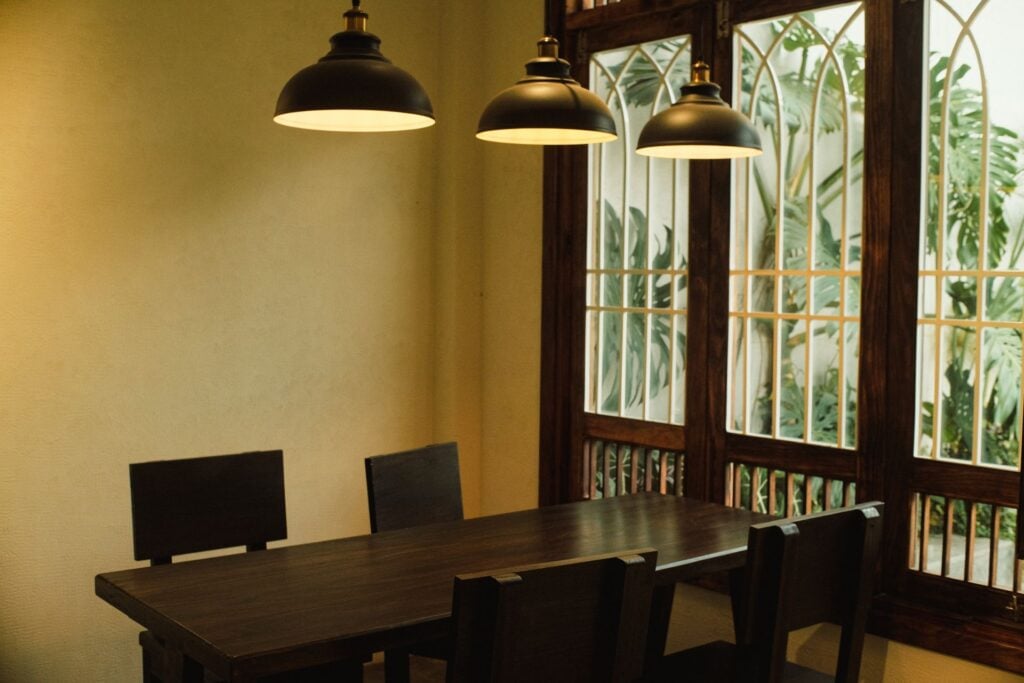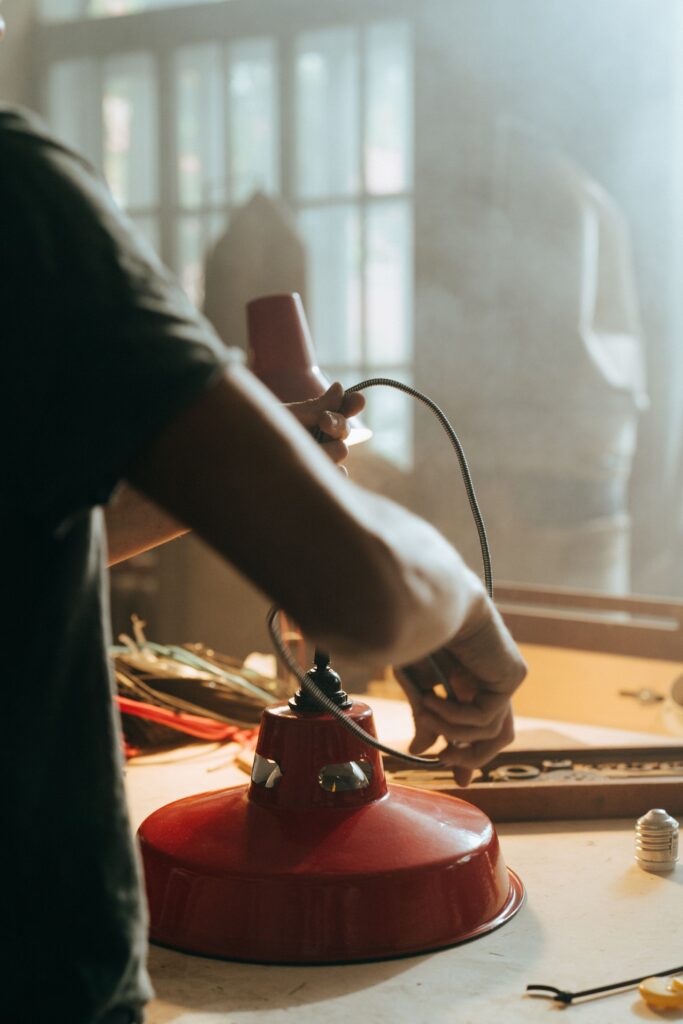
A Pleat shade starts as a single length of cotton, a little over three metres long, and ends two days later as a tight ring of folds around a brass frame. Ingrid has made several hundred of them. She still makes the first fold of every shade herself.
Scoring and folding
The cotton is first bonded to a thin backing paper so it holds a crease. We mark the fold lines in pencil every 14 millimetres and score them with a bone folder against a steel rule. Then the folding begins, one pleat at a time, mountain then valley, until the whole length sits in a stack that looks like a closed fan.
The stack spends a night under weight on the bench. In the morning the pleats remember their shape, and the length can be opened out, wrapped around the frame and joined at the back with a single hidden seam.
Why we still do it by hand
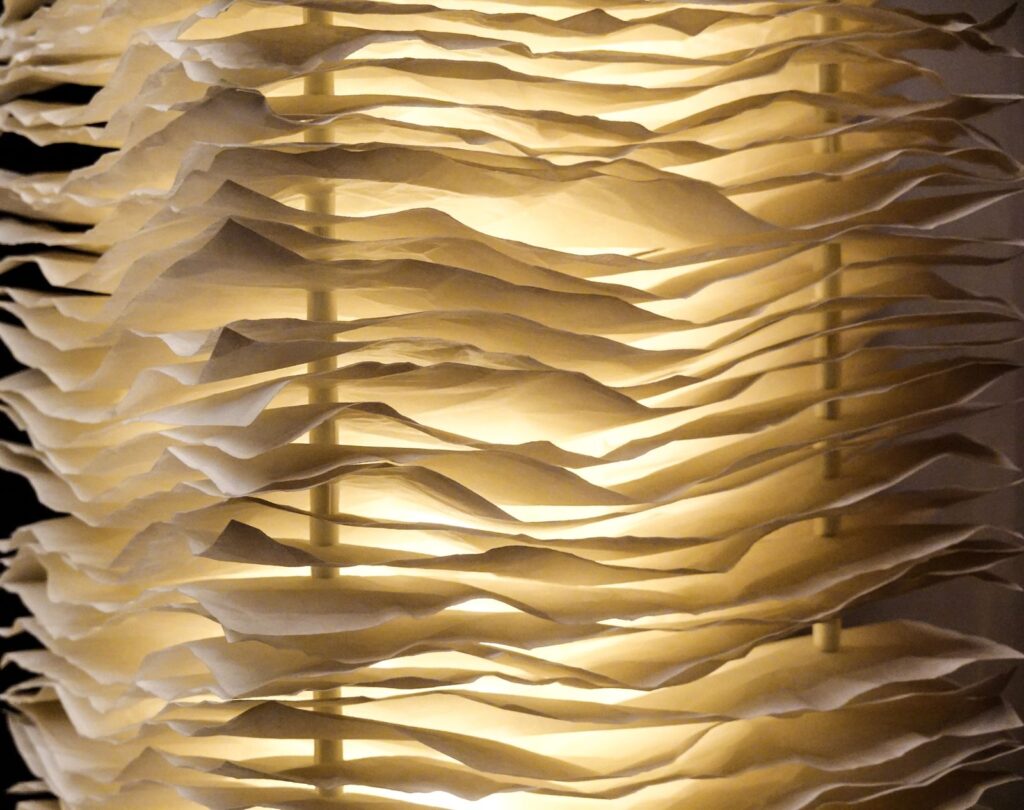
Machines can pleat faster and more evenly. Hand pleating leaves tiny differences between folds, and those differences are what you see when the lamp is on: light catches each ridge a little differently, and the shade looks soft rather than printed.
It also means we can make shades to order in other sizes and fabrics. If you have a base that needs a new shade, write to [email protected] with its height and fitting, and we will tell you what is possible.