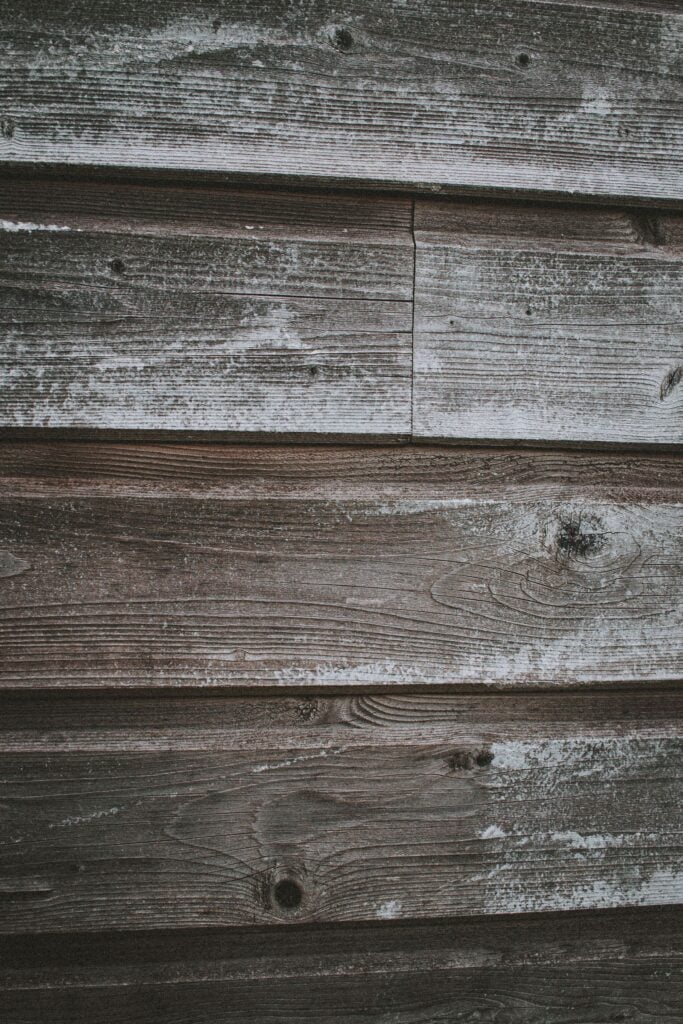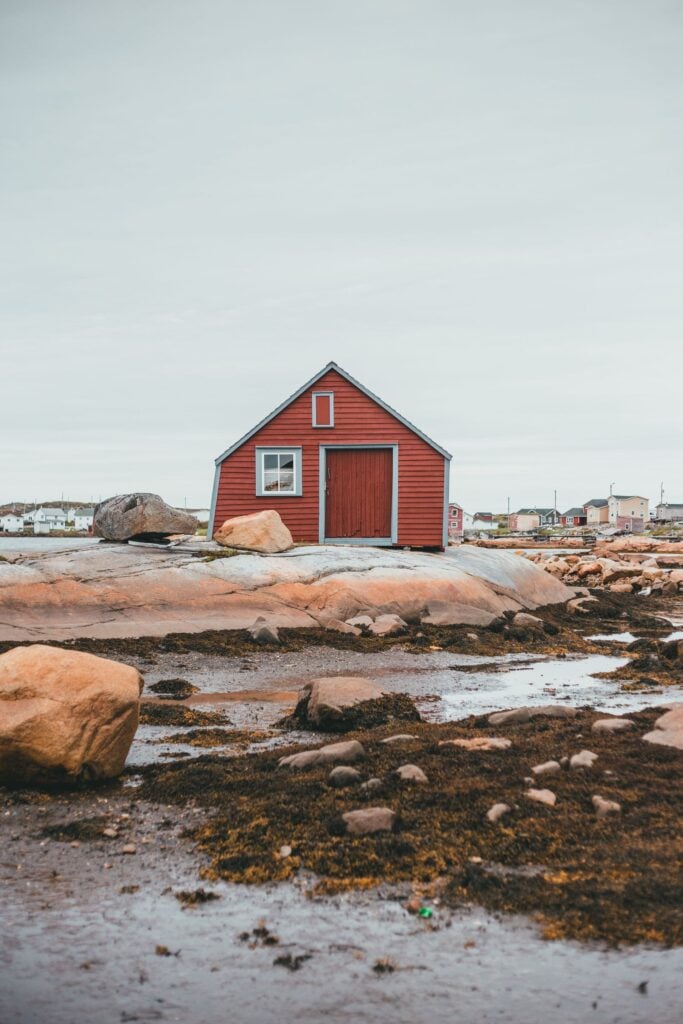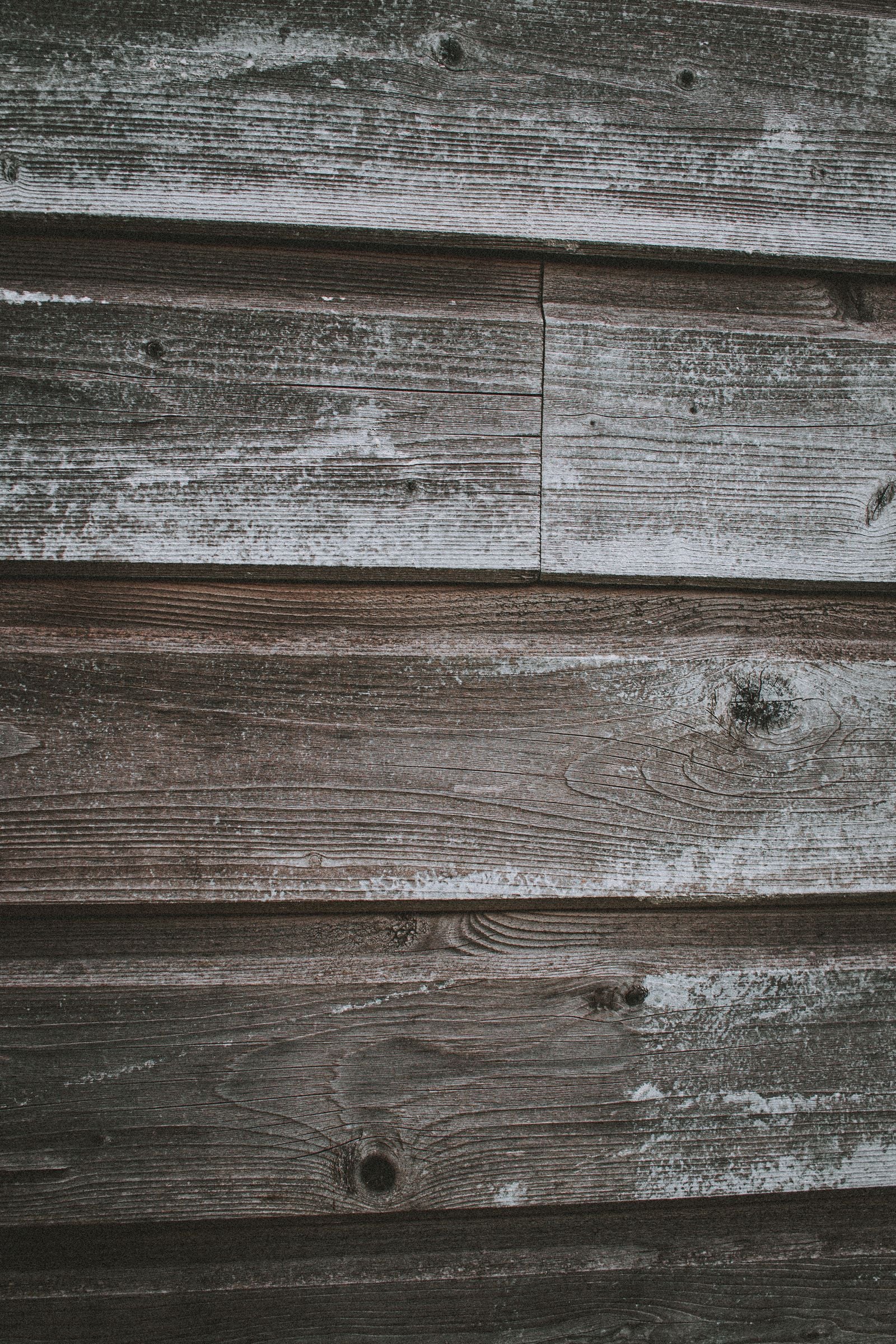
Untreated timber does not stay the colour it arrives in. We stopped treating that as a problem years ago, and started drawing it into the brief.
Every new cladding board is a promise about the future. On the day the scaffolding comes down, a larch or pine facade is honey coloured and even. Within a year on the coast it will have started to change, and within three it will be something else entirely: a soft silver on the weather side, a warmer brown under the eaves, a darker band where the rain runs off a sill. Clients who have seen only the first photograph are sometimes surprised. Clients who have walked past an old boathouse on a Hvaler skerry usually are not.
The grey is not rot. It is the surface lignin breaking down in ultraviolet light and being rinsed away by rain, leaving a thin layer of loose cellulose fibres that holds very little water and very little colour. Underneath, the wood is sound. A well built wall that has gone grey is often in better condition than a painted one that has started to blister, because there is nothing left on it to fail.
Detail decides how it greys
Weathering is honest, but it is not random. It follows water, and water follows the detail. Vertical boards shed rain quickly and grey evenly from top to bottom. Horizontal boards hold a film of water on every upper edge and tend to stripe. Where a window sill has no proper drip edge, a dark tongue spreads down the wall beneath it within a single autumn. Where the eaves are deep, the top metre of a facade can stay warm brown for a decade while the plinth goes almost white.
So we draw for it. We prefer vertical cladding on exposed elevations, with the end grain cut at an angle and lifted well clear of the ground. Sills project and are grooved underneath. Corner boards overlap rather than butt. None of this is new; it is how the builders of the old sea houses worked, because they had no coatings to rely on.
Species matters as much as orientation. Heartwood, the dense inner wood of the trunk, carries natural extractives that resist fungus and water. Sapwood, the paler outer rings, is softer and drinks moisture. A board with a sapwood edge will often grey faster and less evenly than its neighbour, and on a north wall it may turn green before it turns silver. We specify heartwood rich larch or pine for anything that faces the weather, and we ask the sawmill to sort for it rather than trusting a grade stamp.
In the autumn of 2022 we screwed six sample panels of Siberian and Norwegian larch to a granite outcrop at Hvaler, below the site that would become Havhuset. Some were planed, some sawn, some with sapwood left on. We photographed them from the same spot every few weeks for three winters. The sawn boards went silver first and most evenly. The planed boards held their colour longest but streaked. The sapwood strips were the only ones that ever looked tired.
A wall that has gone grey has nothing left on it to fail.
A finish that is meant to wear
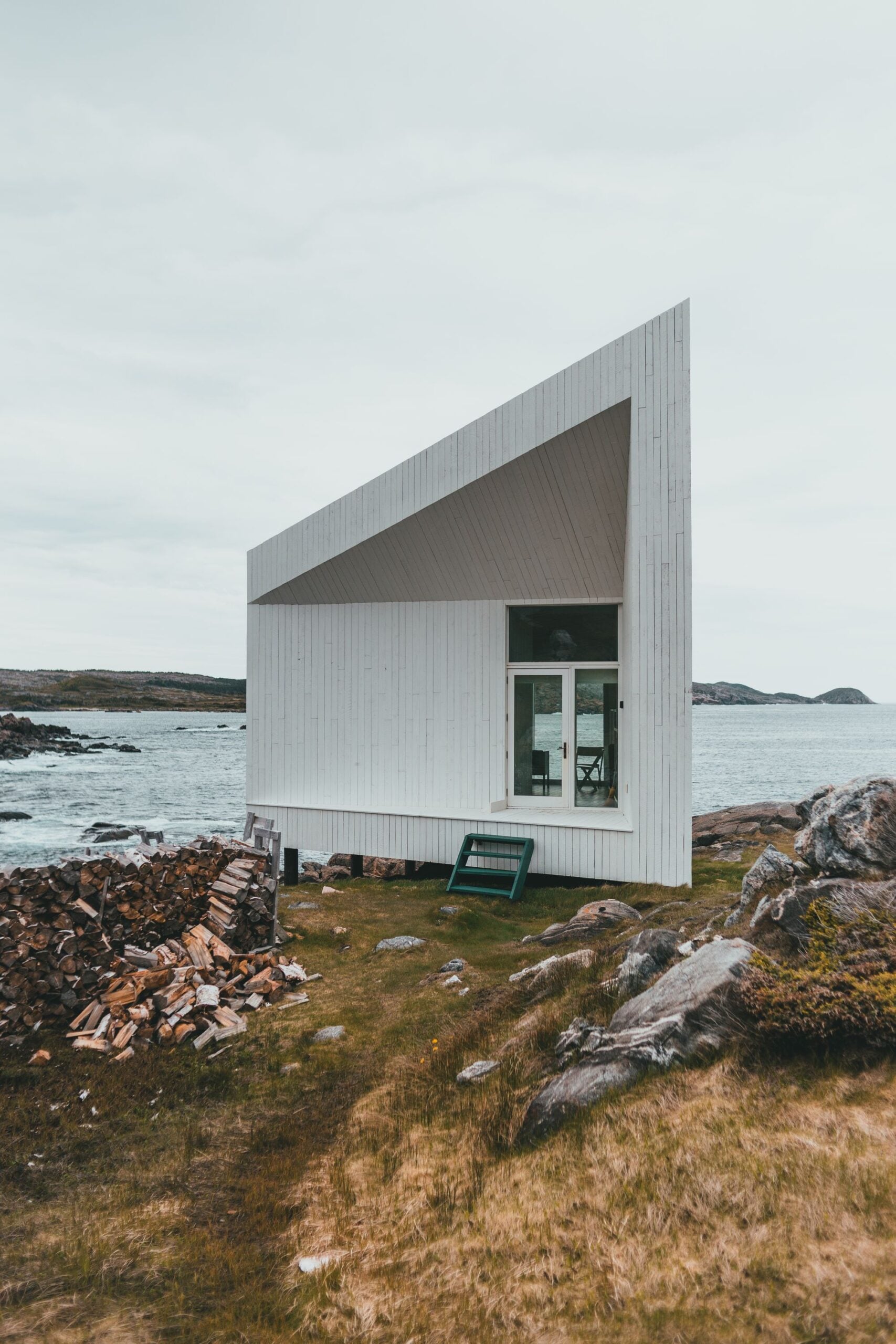
Havhuset is clad in spruce, which is less durable than larch, so we gave it a thin lime wash rather than leaving it bare. Lime is breathable and mineral, it does not trap water behind a film, and it does not peel. It chalks. Each winter the sea wind and the rain will take a little more of it away, and the grey of the spruce will rise through the white like a watermark. In ten years the house will be a pale, uneven silver. We have no plans to renew the wash, and neither, after a long conversation at the kitchen table, do the owners.
That conversation is the real work. We bring the Hvaler photographs to early meetings and lay them out in order, autumn to autumn. We show clients an old boathouse and a new one side by side. We are honest that a weathered facade asks for some patience in its second and third year, when the change is patchy and the house can look unfinished. And we explain that the alternative is a maintenance cycle: scaffolding, sanding and repainting every eight to twelve years, for the life of the building.
Most people, once they see the silver boards on the rocks, choose the weather. If you are planning a timber house, this is what to ask your builder.
- Can the sawmill sort the cladding for heartwood, and keep sapwood edges off the weather side?
- Which way will the boards run on each elevation, and how will the end grain be cut and protected?
- Does every sill, ledge and window head have a drip edge that throws water clear of the wall?
- How far will the lowest boards sit above the ground, and what happens to splash back from the terrace?
Written by Amara Okafor, partner for interiors.